The CDC used to have a good reputation until the pandemic. Now, I find myself often wondering if information that is provided is skewed because of political appointees, particularly RFK Jr.
This isn’t a new problem. The first public facing change was in 2022, when CDC change the colors on their risk levels map. The old map is on the left, the new one is on the right using the revised methodology. This was what I considered their first attempt to minimize the pandemic. The old one was more of a measure of transmission (cases and positivity), the one on the right is more of a measure of severity (hospitalization and hospital capacity).
There have been two changes to CDC categorization of wastewater data since that time.
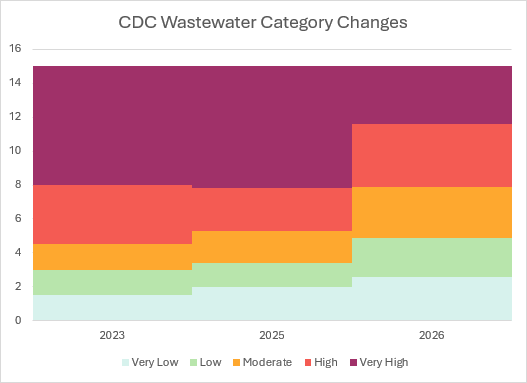
In 2025, they changed their baseline criteria. The biggest change was using a baseline of the past 24 months. That greatly skewed the categorization because if the prior 24 months had been excessively high, the current reading of what might have been high in the past would be considered normal. Categories of risk were also changed at this time.
Original categories
Minimal: < 1.5
Low: 1.5 to ≤ 3
Moderate: > 3 to ≤ 4.5
High: > 4.5 to ≤ 8
Very High: > 8
2025 categories
Very Low: < 2
Low: > 2 to ≤ 3.4
Moderate: > 3.4 to ≤ 5.3
High: > 5.3 to ≤ 7.8
Very High: > 7.8
2026 categories
Very Low: ≤ 2.6
Low: >2.6 to 4.9
Moderate: >4.9 to 7.9
High: >7.9 to 11.6
Very High: > 11.6
Here’s how that looks graphically. You can really see how this completely changes the public perception of risk.
That makes minimization on a dashboard really easy to do.
Here’s what the map would be prior to those changes. Most of the public doesn’t have a clue how bad COVID is right now. A big part of that is due to lower hospitalizations.
I find it shameful that there is better information coming from a handful of us trying to protect the public than from the agencies who should be doing that work. It’s even worse when the health leadership in this administration further wants to derail the public health train.
Trigger warning: If you are prone to anxiety, you may want to skip this one.
“Many people dismiss any talk of collapse as akin to the street-corner prophet warning that the end is nigh. In the past couple of centuries, humanity has innovated its way past so many predicted plagues, famines and wars – from Malthus to Dr Strangelove – that anyone who takes such ideas seriously tends to be labeled a doom-monger.” – Debora Mackenzie, 2008.
COVID is not the cause of collapse; it is the accelerant that exposed pre‑existing systemic fragility
Introduction
I wrote variations on the themes below much earlier in the pandemic, but these were the easiest to find. The others were likely in individual conversations with people or on Facebook, which is incredibly hard to search. My point hasn’t changed though. the worst lies ahead.
Personal Background
It might be worth explaining why I have a very unique perspective on what is to follow. I’m an infectious disease epidemiologist by training and went immediately into healthcare infection prevention. I describe the role of an infection preventionist is acting as the public health department for a health system or hospital.
Oddly enough, during grad school I had started my thesis work on bioterrorism preparedness planning in healthcare settings. I had teachers and classmates wondering why I would work on such a remote risk. That was in 2000. September 11th happened, and the volume of pertinent research became a tsunami. It was obvious that what I was working on would be impossible to keep current and would be more of a dissertation, so I changed focus. However, I had learned enough through literature searches and FOIA requests that I still stuck closely to that area of interest through my career.
H5N1 first emerged in 1996 when it made the zoonotic disease jump into humans. It surged again in 2003 and spread outside of Asia for the first time. I had been monitoring it closely and was asked to speak at a conference about it. That eventually led to me speaking at conferences, universities, grand rounds, and community groups around the world on that topic and others with public health implications, such as other emerging diseases, antibiotic resistance, and emergency preparedness. Shortly after that I also became involved in a federal disaster medicine team. The photo in my social media profiles is an award I received from the deputy secretary of HHS related to COVID work.
I was approached by a Fortune 10 company about working in their resilience and business continuity planning. It sounded like an interesting change and I eventually was writing and facilitating disaster scenarios for primarily their clinical and pharmaceutical teams around the world, but other groups as well.
There really are only four categories of loss that can interrupt business operations: human resources, vendors, facilities, and information technology. I had to not only become an expert in these areas since I was going to be dealing with experts, but also had to get creative and think ahead with problems to test them that others hadn’t considered.
For example, for an area that developed prescription contact lenses and glasses, I wrote a scenario where a disgruntled IT employee embedded some code in the eyeglass lens manufacturing software. It slightly altered prescriptions, only on one lens, and only sporadically. It obviously would take some time for them to get enough data from retail locations to even identify the problem. They also had to figure out how to manage damage to the brand reputation.
I became good enough at this to where some of the scenarios I was writing unfolded in the real world sometimes a couple of years later.
My interests were a little bigger though, such as some of the major data hubs around the world having a breech, suboceanic fiberoptic cables being cut, a repeat of the Carrington Event, and so one. Traditionally, people who worked in this arena did the usual tornado, snowstorm, earthquake, and other simple scenarios. The responses from the team didn’t change much with what I was writing, but it stretched their thinking and mine.
I’m explaining all of that to give some idea that I’m not just pulling things randomly out of the air. I actually have a wealth of knowledge about how quickly things can go wrong in complex systems.
Climate Change
In 2019, I was fortunate enough to take the Climate Reality Leadership Course from former VP Al Gore. I snuck this photo from my seat.
My plan for that winter had been to write a conference presentation on the health impacts of climate change. COVID hit, and given how much work I had done on pandemics, I knew that would be placed on the back burner for some time.
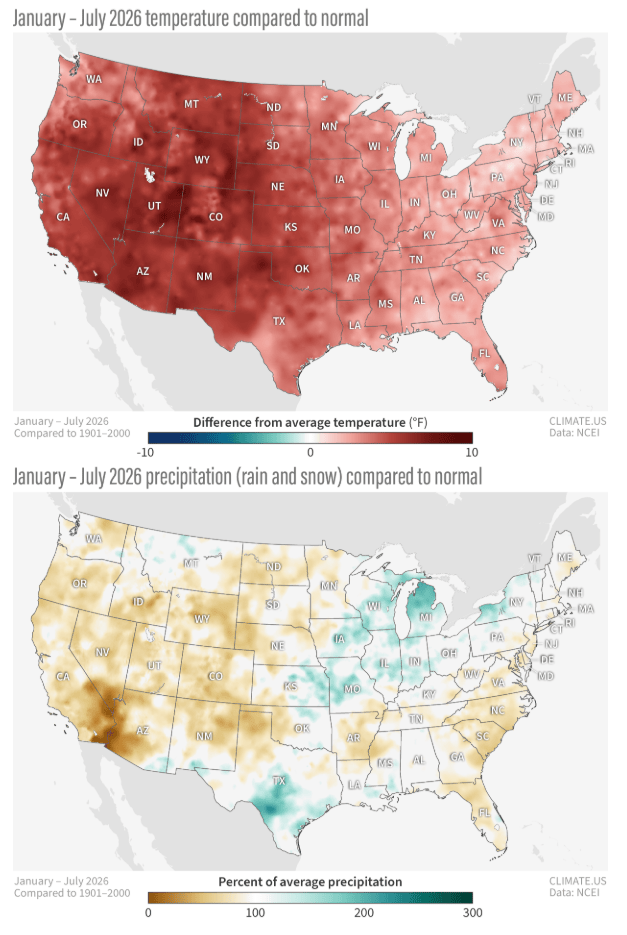
One of the strangest things is how people can deny what is happening. Look at both temperature and precipitation variances in the US this year from the mean.
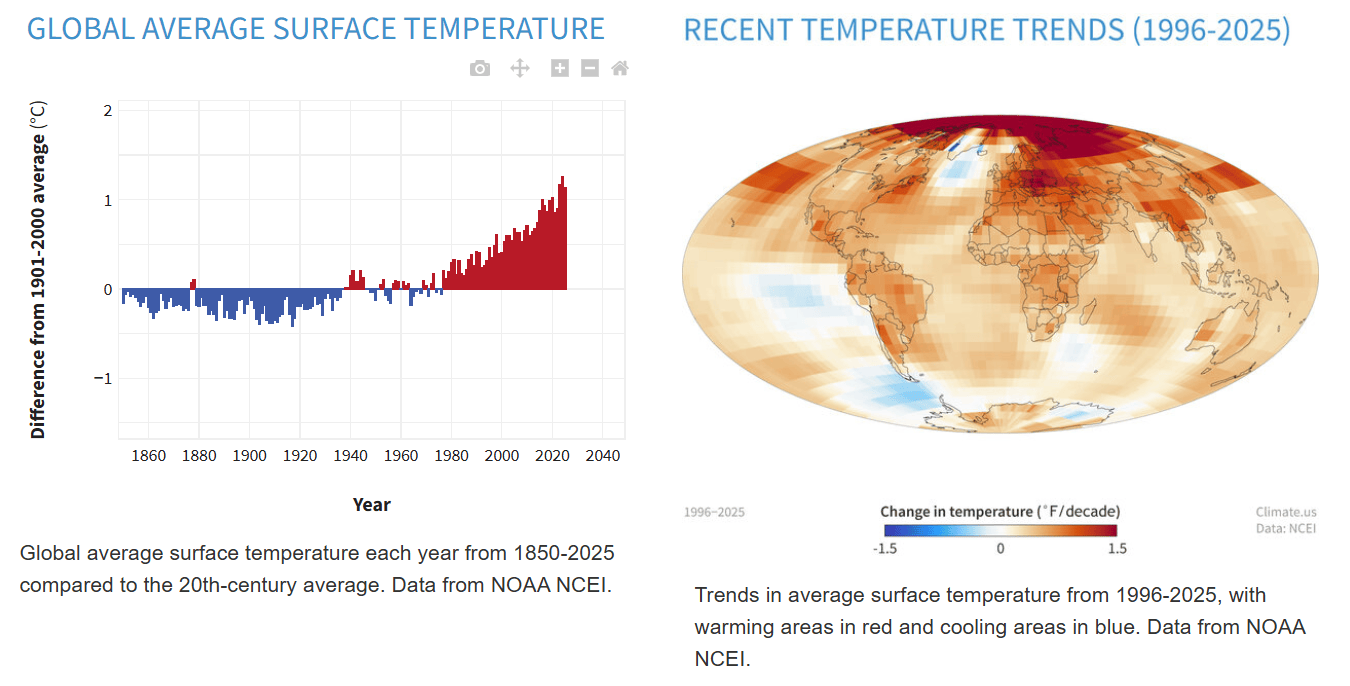
This is a global problem and we are ignoring it just like we are with COVID.
It amazes me how with a flood of both anecdotal evidence and data that there are still people who are in denial about the reality of where this is going. How can people not care about the volumes of floods, heat waves, wildfires, intense storms, or even the landslide in Nepal likely triggered by climate?
One impact from climate change that many people don’t consider is how it drives humans into wild areas or animals from wild areas into human areas. It’s estimated that there are over 600,000 unknown pathogens that could act as zoonotic diseases. In addition, who knows what lies dormant in the permafrost.
As an example, a few decades ago in Minnesota, a new county road was being built in a rural area that was going to cut through farmland. A farmer came out and watched the road crew and was noticed to be frequently shaking his head and mumbling “wouldn’t do that,” or words to that effect when they were doing the surveying. Later, when the earth moving equipment came out, he was out there again. Finally, someone had the intelligence to ask him why he was doing that every day. He told them that where they were digging to put the road is where they buried the carcasses of cows that had anthrax.
Federal Administrative Cuts and Actions
Foreign public health was one of the largest beneficiaries of USAID. It was responsible for helping contain disease outbreaks like Ebola, diminishing the burden of HIV, maternal and child health programs, as well as vaccination programs. They also were responsible for field research in infectious disease.
Take Ebola for example. The current outbreak has identified over 6,000 cases. Each infection increases the risk of a mutation that turns this into an airborne disease. How do we know that is possible? It’s already happened with Ebola Reston, which fortunately didn’t infect humans. Airborne transmission has been thought to play a role in some human infections.
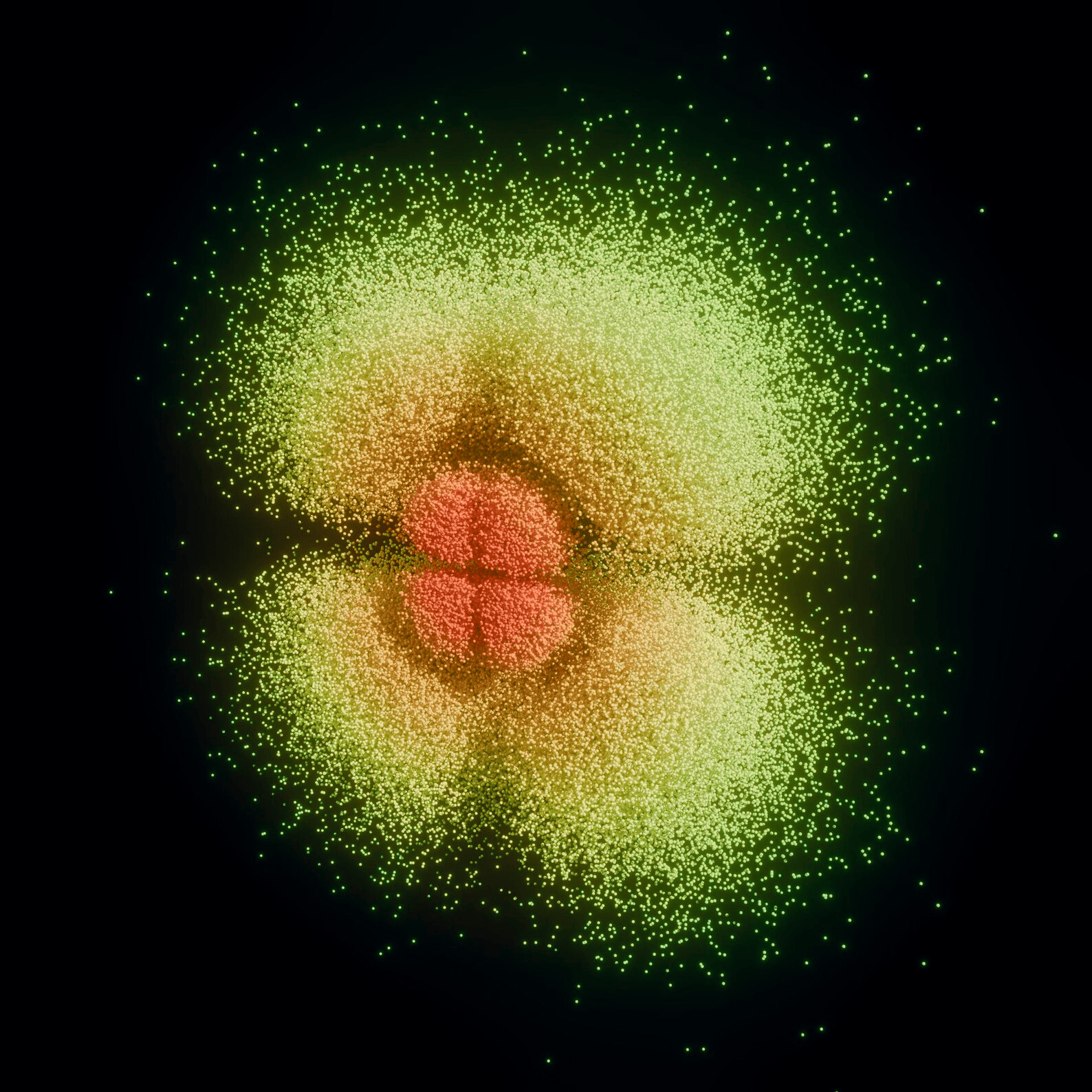
As a quick sidebar on airborne transmission, I remember early in my career questioning why we required respirators for tuberculosis but only surgical masks for influenza. I was questioning the categorization of droplet and airborne transmission very early on. This eventually led to my thinking that there really wasn’t a distinction, but it was more of a probability function of whether respiratory disease was spread primarily by droplet nuclei or aerosols. Further, I argued that in extremely dry conditions, and indoors (think winter), some of the droplets would quickly evaporate leaving the nuclei suspended, thus becoming airborne. I realized that a good analogy from chemistry has to do with atomic orbitals, which describe the probability of finding an electron in a particular spot relative to the nucleus of the atom, as shown below.
USAID was also part of famine monitoring and food distribution and helped support US farmers through the purchase and distribution of food. It’s also estimated that the work done through the program supported about 200,000 jobs in the US. It had operational and logistical plans in place for disaster response. The impacts from abruptly unplugging USAID were massive, both domestically and abroad.
The cuts to funding of scientific research are one of the most short-sighted policies in recent history. Many research projects can’t just shut down and restart. Once they are gone, they are gone. This will have a negative impact on science and medicine for decades.
When this administration cannot correctly handle measles, cryptosporidiosis, and other epidemics and foodborne outbreaks, I have massive concerns about how they would handle another pandemic or biological weapons attack, particularly after closing the US Office for Pandemic Policy.
Food Insecurity
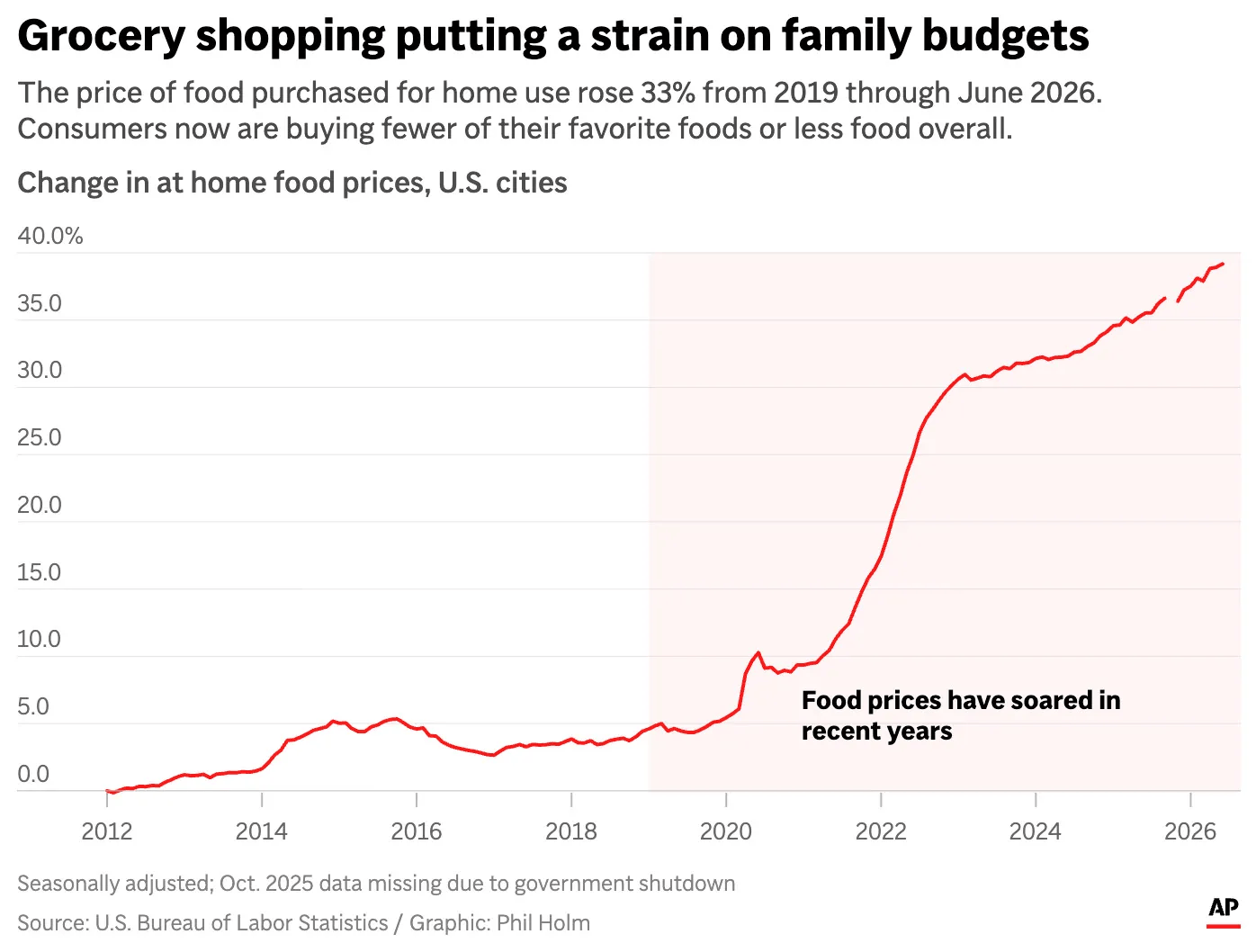
Climate change is an obvious driver of food insecurity as are many other factors. I’ve recently written about this, so I won’t dive into it deeply here. Suffice to say though that aggression increases when people are hungry and desperate. However, it’s worth noting that this tends to affect people who live on the margins more and try to get by check-to-check. There simply isn’t enough room in many budgets to easily absorb these food costs.
Supply Chains
One would think that as a species we would have learned more about supply chain issues early in the pandemic. A mix of demand and true choke points in supply chain can quickly limit availability to consumers. Toilet paper and the blockage of the Suez Canal by the Ever Given were perfect examples, as were the shelves that were empty of over-the-counter medications. Now energy and fertilizer supplies are blocked due to both the wars in the Strait of Hormuz and Ukraine.
One concerning trend in supply chains can be found in the trucking industry. Over the past 10 years, the turnover rate of truckers has ranged from 95-112%. In the book The Secret Life of Groceries: The Dark Miracle of the American Supermarket, Benjamin Lorr continues “What appears to be happening is that the industry has figured out not only how to make humans replaceable but also how to make money off their replacement. The labor shortage is profitable. Recruiting rapaciously and dishonestly, convincing recruits to take out lines of credit for the opportunity, and then paying those new recruits the lowest possible wages for the labor—they call these “training rates”—all work synergistically. I am told by various industry observers that the trucking industry earns its highest profits on student drivers.”
I had honestly forgotten that trucking was an example in the article associated with the quote at the top of this page. She writes, “When a strike blocked petrol deliveries from the UK’s oil refineries for 10 days in 2000, nearly a third of motorists ran out of fuel, some train and bus services were cancelled, shops began to run out of food, hospitals were reduced to running minimal services, hazardous waste piled up, and bodies went unburied.”
It should really be concerning that this industry has so many inexperienced people on the highways. I’ve been run off of the freeway onto the shoulder by semis that were changing lanes twice. One time, I had a semi directly in front of me lose its load of telephone poles on the freeway. My only option to avoid a collision was to rapidly go into the grass along the freeway while doing over 70 mph. I am still shocked that I was able to maintain control and get back onto the roadway. It could have gone considerably worse.
That also brings up the point that I’ve been repeatedly making about the neurological impairment that comes from COVID infections. It seems like a perfect storm to have inexperienced drivers who are impaired due to the virus which will create further hazards on the roadways.
Think about this same issue in other industries that require attention to detail and expertise. What happens when those who have experience are forced out of the workforce from death or long COVID? When I mentored grad students, one question I would often ask them is where they think that the best ideas are. They often had a number of good answers, but the point I wanted to drive home with them is to act on those ideas. My answer to the question is that most of the best ideas are six feet underground. We are on a path where the same can be said for the best solutions to problems.
COVID: The Straw that Is Breaking the Healthcare Camel’s Back
We are already facing healthcare challenges in the US as the Baby Boom generation is getting older and needing more care.
U.S. Population Pyramid (Decennial Census Data)
1900
Male
Female
Baby Boomers
This is not the only additional strain on the demand side of the healthcare system. The damage from COVID effectively ages people and is a trigger for many chronic diseases due to the tissue damage from infection. I make the argument that we don’t see that in younger and younger age groups because they still have adequate healthy tissue to take on the extra burden from the damaged tissue. As that tissue ages though, it will not have the capacity to do so, leading to chronic disease. In addition, focal tissue death occurs when the smallest of capillaries are occluded due to COVID resulting in the death of cells where that capillary provides oxygen and nutrients. There is also evidence that cells that have been infected sustain telomere damage, which limits the number of times it can divide, known as cellular senescence, whereby they keep functioning but eventually die and cannot be replaced. This impact grows with age or with each repeated infection.
The healthcare worker (HCW) supply side is in even worse shape. One of the drivers is simple burnout, as seen in the graph below from the paper by Mohr et. al. This has HCWs looking to leave the workforce. A 2023 survey of SEIU HCWs indicated that “Forty-nine percent of healthcare workers say they are likely to leave the healthcare profession in the next few years (24% very likely, 25% somewhat likely), while only 19% say they are not at all likely. Not only does this look dark from the supply side, but it also has the same problem of losing expertise gained by experience alluded to earlier.
Most people likely think of that in terms of hospital care, but it is a primary care and long-term care facility issue as well. This is a map from HRSA indicating where the shortages are the worst (darkest green areas). Use the link to zoom in closer and see other related maps. If you think wait times to get care now are bad, this may soon seem like the “good old days.”
How Could We Have Known?
The quote at the beginning of the article by Debora Mackenzie is from an article she wrote in The New Scientist. I almost always referenced it when I spoke on pandemics, wrote pandemic plans, or facilitated pandemic exercises and encouraged people to read it.
She continues, “In a severe pandemic, the disease might only be the start of our problems…It’s not only absentee truck drivers that could cripple the transport system; new drivers can be drafted in and trained fairly quickly, after all. Trucks need fuel, too. What if staff at the refineries that produce it don’t show up for work?…Refineries make diesel fuel not only for trucks but also for the trains that deliver coal to electricity generators, which now usually have only 20 days’ reserve supply…The coal mines need electricity to keep working. Pumping oil through pipelines and water through mains also requires electricity. Making electricity depends largely on coal; getting coal depends on electricity; they all need refineries and key people; the people need transport, food and clean water…[don’t even get me started on the threat of AI both on controlling systems but also impacts on clean water supplies]
…With no electricity, shops will be unable to keep food refrigerated even if they get deliveries. Their tills won’t work either. Many consumers won’t be able to cook what food they do have. With no chlorine, water-borne diseases could strike just as it becomes hard to boil water. Communications could start to break down as radio and TV broadcasters, phone systems and the internet fall victim to power cuts and absent staff. This could cripple the global financial system, right down to local cash machines, and will greatly complicate attempts to maintain order and get systems up and running again.“
This simply all shows that we are incredibly vulnerable, and most people don’t understand the scale and how quickly things can go south. When one part of the whole fails, other parts become more prone to fail as well. This is why I’m so concerned about the collapse of healthcare and worry that lies somewhere in the 2030s in the US.
Exponential growth of a disease is difficult for most people to understand. As we saw with the delta and original omicron waves, things can seem like they are under control and then seem to explode almost overnight. I’ve made this animation to illustrate the process. The code simply simulates two people within an entire population (represented by the circle) infected with a disease. When they come in contact with each other, a new person in the population becomes infected. I have the coding set so you will see the rapid change in under two minutes time. They will pause when essentially full for 5 seconds and then will reset and start again.
Now think about how long it took for those two people to create a problem. Now reframe that to think instead of individuals, replace them with entire sectors (food, water, transportation, healthcare, electricity, etc.). I’ve mentioned many of these above. Below is the exact same simulation, but in this instance it starts with what would have been 10 infected individual, but remember now we are talking about 10 different sectors that are failing. Watch just how much more quickly this becomes a problem and starts causing other sectors to face failure and collapse.
1177 B.C.: The Year Civilization Collapsed
I finished this book a few days ago. It was the impetus to write my concerns much more directly. At the very onset of the pandemic, I’ve been constantly thinking about these issues, but waited to write about it because I knew it would generate a lot of claims that I was fear mongering. When I finally wrote a bit about it in May, 2021, particularly when I wrote about quaternary impacts, I still held back some for the same reason. I simply didn’t think that the public was quite ready to hear it.
Cline’s book finally gave me some historical precedent to put this all together. “In our current view, as we shall see below, the Sea Peoples may well have been responsible for some of the destruction that occurred at the end of the Late Bronze Age, but it is much more likely that a concatenation of events, both human and natural—including climate change leading to drought and famine, seismic disasters known as earthquake storms, internal rebellions, and “systems collapse”—coalesced to create a perfect storm that brought this age to an end.” This is exactly where we are at in the world, and particularly in the US, right now. The US is just a likely tipping point for the world economy and sociopolitical norms.
That is where I think we are at. It’s very possible that we have already crossed that tipping point because of COVID. If we haven’t, any of the things I’ve mentioned, and many others, could play the tipping point role.
This is why I’m so angry at grifters, minimizers, and antivaxxers. IT DIDN’T HAVE TO BE THIS WAY. It’s even more infuriating that I put myself on the front line at the start of February 2020 dealing directly with the quarantine of the evacuees from China to try to prevent this only to be given the figurative collective finger by a large proportion of the population as I continued to encourage respiratory protection, social distancing, and vaccines when they became available.
What can be done? The answer is simple. It’s pretty much the opposite of everything the current administration is doing. They are accelerating collapse. Vote this November.
My insomnia isn’t driven by COVID the disease. My insomnia is driven by COVID the social impactor.
I refuse to live in a feudal society.
Addendum:
9/8/26 I just happened to listen to a podcast today about the Black Death. There are many parallels related to multiple systems failing.